






Why your heat pump smells like burning in Louisiana

Step 1 of 3: Equipment

A burning smell from your heat pump usually means dust burning off the heat strips the first time they kick on, and that clears up in a few minutes. In Louisiana most homes heat with electricity, so those backup strips get little use until a cold snap finally calls for them, and the dust sitting on them burns off fast. That's harmless once. If the smell keeps coming back, lingers, or turns sharp or plastic rather than dusty, something is wrong: a wire overheating, a motor bearing going bad, or a component shorting out inside the unit. That kind of smell means power is going somewhere it shouldn't, and running the system while it does risks more damage or a bigger repair later. A burnt dust smell on the first cold day is nothing to act on. A smell that returns or changes is your signal to get the system looked at before you run it again.

  1. Cold snap hits and your heat pump calls for backup heat

  2. Electric heat strips energize inside the air handler cabinet

  3. Dust that settled on the strips over months starts to burn off

  4. Smell fades once the strips finish their first few minutes of use

A woman in a cream cardigan and jeans stands with one hand raised facing an open front door of a gray horizontal-siding house, with a black lantern wall light, a potted shrub with yellow flowers, and a stone-faced porch column.

If the smell doesn't fade

A few minutes of burning smell when the strips first fire is normal. If it's still there after that, or it comes back every time the heat runs, something besides dust is burning. That can be a wire with worn insulation, a motor bearing going bad, or a component inside the air handler that's failing. None of those clear up on their own, and running the system while it happens is how a bigger repair starts.

A cold snap in Louisiana doesn't last long, but it's exactly when you need the heat strips working, and exactly when a bad smell is easiest to ignore because everyone's cold. Once you send in your information, finding someone to look at it stops being on you. A contractor who handles heat pump repairs in your area gets your details and reaches out, so you're not the one calling around while the house is cold.

A living room corner with a beige upholstered armchair holding navy and striped cushions, a small round wooden side table with a carved bowl and a potted green plant, a framed landscape picture on a pale wall, built-in shelving, and a curtained window.
An outdoor heat pump unit on a concrete pad beside a house corner, with a small electrical box and conduit on the wall, gravel border, grass, and a plain light-colored wall filling the right side.

Why strips sit unused so long

Heat pumps move heat instead of making it, so the strips only step in when the outdoor air gets too cold for that to work well. In Louisiana that might mean a handful of mornings a year. The rest of the time the strips sit cold, collecting dust from the air passing through the cabinet, and nothing burns it off until the next cold snap asks the strips to run.

A grey outdoor heat pump unit on a concrete pad beside a white stucco wall and dark siding with a downpipe, with gravel and grass in the foreground.

What the smell is not

A burning smell is not the refrigerant, and it is not the outdoor unit. Refrigerant doesn't burn or produce an odor you'd notice this way. The strips sit inside the air handler, usually a closet or attic, so if you smell it strongest near a supply vent or that indoor cabinet, that points to the strips rather than anything outside. It should ease off as the dust clears and air keeps moving past the hot metal.

What are you noticing when the heat runs

You turn the heat on after a cold night and catch a burnt dust smell coming from the vents. Maybe you see a haze near the air handler, or the smell is stronger in one room than others. If it fades in a few minutes, that is the strips doing what they do. If it lingers, comes back every time the heat kicks on, or turns into something sharper, like hot plastic or an electrical smell, that is not dust anymore. Left alone, a wiring or motor problem that keeps heating up can trip the system, damage the air handler, or become a fire risk. That is worth having looked at before the next cold snap, not after.

An outdoor condenser unit beside a horizontally sided house, encased in thick ice with hanging icicles, on a snow-dusted ground at sunset with bare trees in the background.

Ice has built up overnight on the outdoor unit, a thick white crust over the coils, the fan hidden under it. You step out in the dark before work, breath showing in air that almost never gets cold enough for that here, and you catch it again, that burnt dust smell drifting from the vents inside. The unit outside sits quiet under its ice, not able to do much like that. Inside, the heat strips are carrying the load alone, and the smell hangs on past the few minutes it usually takes to clear. You stand there in the cold side yard a moment, looking at the ice, before you go back in to the warm, strange-smelling house.

Get your heat pump to the right pro

A smell that fades in a few minutes is dust. One that lingers, or shows up every time the heat kicks on, is something else, and it is not worth guessing at. Worn wire insulation, a failing blower motor, a strip that is shorting against the cabinet, all of those smell like burning too, and none of them get better on their own. In a state where the strips barely run, you do not get many chances to catch a problem before a hard freeze forces them on for real, so the first bad night is the one to act on, not wait through. A heat pump that is making that smell past the first few minutes needs a look from someone who works on these systems, not another test run to see if it happens again. Send the request and a contractor who handles heat pump repair in your area will reach out, and from there it is off your plate.

Smell clears on its own

The strips fire, the dust on them burns off, and within a few minutes the air coming through the vents is clean again. You might notice it once, maybe twice, the first couple of times the heat pump calls for backup heat after a cold snap. It doesn't come back once that dust is gone. Nothing in the air handler needs attention, and the smell doesn't return the next time the strips run, or the time after that. This is the ordinary case for most homes here, since the strips see so little use.


Smell keeps coming back

The smell doesn't fade in a few minutes, or it shows up again every time the heat runs, not just the first time after a cold snap. That pattern points to something other than dust, a wire with worn insulation, a blower motor under strain, or a strip shorting against the cabinet. None of those clear up on their own, and running the heat again doesn't help. Left alone, the problem tends to get worse rather than better. This is the case worth having looked at, since guessing which part it is from outside the cabinet isn't something you can do safely.

Power costs 12.52 cents per kilowatt-hour statewide

At 12.52 cents a kilowatt-hour, running those heat strips costs more than the heat pump itself does on a normal day. That's one more reason to let the smell clear on its own if it's just the first-run dust, and get it looked at if it isn't, instead of leaving backup heat running longer than it needs to.

EIA-861 2025 statewide residential average

Let it run its course. If the smell shows up on the first cold morning of the year and fades out in a few minutes, the strips did their job and so did the dust on them.

Get it checked. If the smell comes back every time the heat runs, or it hangs around longer than a few minutes, leave it to someone who can open the cabinet and look.

A gray-haired woman in a cream knit sweater stands in a dimly lit kitchen at night, looking to her right, with a round loaf of bread in the foreground and a dark window and potted plant behind her.
A woman and a sleeping child wrapped together in a cream knitted blanket on a couch, with a potted plant, framed photo and lit lamp in the background.

Dust Burning Off, or Something Shorting

Dust burning off

  • The smell shows up the first time the strips fire after a cold snap, and it's gone within a few minutes.
  • It smells like dust on a hot surface, not like melting plastic or hot metal.
  • It happens once, or maybe a second time early in the season, then stops showing up at all.
  • No haze lingers near the air handler once the strips finish their cycle.
  • The rest of the house still heats normally while the smell is there and after it clears.

Something is shorting

  • The smell comes back every time the heat runs, not just the first cold morning.
  • It smells sharper, like hot plastic or scorched metal, instead of plain dust.
  • It lingers well past the few minutes it takes the strips to finish their first-run burn-off.
  • You notice a haze or faint smoke near the air handler, not just an odor.
  • The smell shows up even on mild days, when the strips shouldn't be energizing at all.
  • One room smells worse than the others, or the air handler itself feels warm to the touch outside its cabinet.
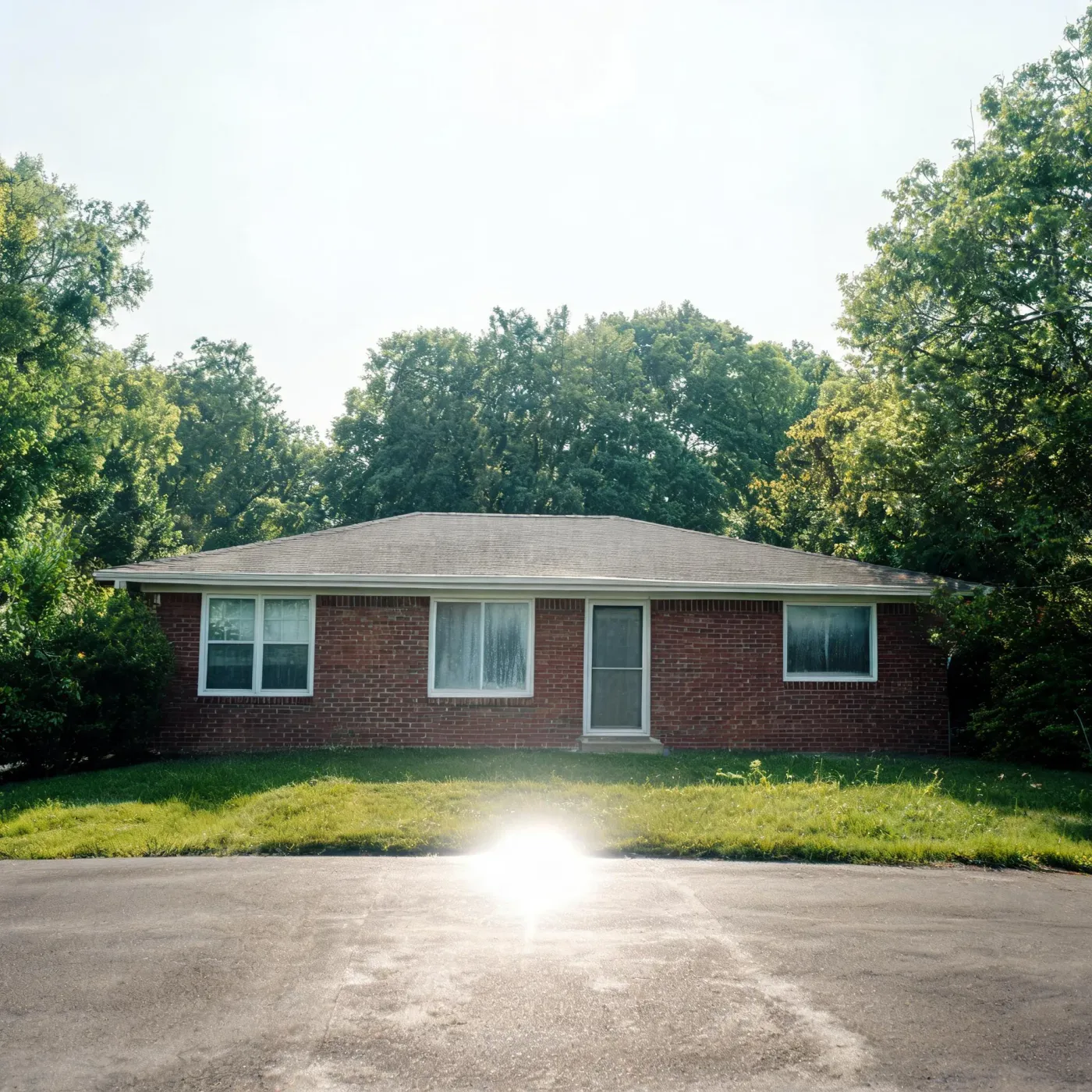
A single-story red brick house with a shingled hip roof, three windows and a central storm door, fronted by a mowed lawn and an asphalt driveway, with dense green trees behind it and sun flare in the foreground.

That dew point sitting at 73°F across June, July and August, as NOAA data for Louisiana shows, is why the air outside feels like a wet towel most of the summer. Your heat pump has to pull that moisture out of the air before it can even start cooling the room, which runs it longer than the thermostat setting alone would suggest. It has nothing to do with the burning smell from the heat strips. That's a cold weather problem, this is a wet one, and it's the humidity that keeps your system working hardest while the strips sit unused.

NASA POWER T2MDEW county cells weighted by homes

An outdoor air conditioner condenser unit on a concrete pad beside a house with beige horizontal siding, with conduit running from an electrical box on the wall.
Before you get your heat pump repair
A beige outdoor air conditioning condenser unit on a concrete pad beside a house with horizontal vinyl siding, with refrigerant lines and a disconnect box on the wall, surrounded by dark mulch and a green shrub at left.
After you get your heat pump repair

Dust clears, problems don't

  • A smell that fades within a few minutes of the strips firing is just dust and needs nothing from you.
  • A smell that lingers past the first few minutes, or returns every time the heat runs, points to a wire, motor or strip problem.
  • Worn insulation, a failing blower motor or a strip shorting against the cabinet won't fix themselves by waiting.
  • Once you send the form, finding someone to look at it is off your plate.
  • A contractor who works on heat pumps in Louisiana will know what's behind the smell once they're in front of it.
  • You don't have to decide alone whether what you're smelling is the first-run dust or something that needs a repair.

The smell coming from your vents when the heat runs tells you most of what you need to know. Dust burning off the strips fades fast, usually within a few minutes, and it won't be back until the next cold snap makes the strips fire again. That's the whole story in a normal year here, since Louisiana winters don't ask much of them. A smell that sticks around, or shows up every single time the heat kicks on, is a different story. That's not dust anymore. A wire with worn insulation, a blower motor on its way out, a strip shorting against the cabinet wall, any of those will keep producing that burnt smell for as long as you let them run, and none of them gets better with time. Waiting doesn't fix a short. It just gives it more chances to do damage. You don't need to figure out which one it is before you act. What you do need to figure out is which kind of smell you're dealing with, the kind that clears or the kind that doesn't, and once you know that, the next step is simple. Send the form and the work of finding someone who services heat pumps in your area stops being yours to carry. A contractor who knows this equipment can tell you in minutes what's behind it once they're standing in front of your air handler, something no amount of guessing from the living room will do.

Sunlight falls across a beige upholstered sofa with a textured woven cushion and a chunky knit throw, beside a dark wood cabinet holding a ceramic vase with green leafy branches, near a white-framed window.
A sunlit corner of a room with a wooden side table holding a ceramic vase of green foliage and a wooden bowl, beside a light upholstered sofa with a knit throw and rust-colored pillow, with window shadows cast on a beige wall.
A sunlit room corner with beige walls, a white-framed window with sheer cream curtain, wood floor with a light rug, and a woven basket holding a knit blanket.
A beige ceramic vase holding a leafy green branch sits on a wooden cabinet in a corner, with sunlight through a sheer curtain casting leaf shadows on the wall.
A grey upholstered sofa with a rust-orange velvet cushion and a textured throw sits beside a window with linen curtains, next to a wooden side table holding a pale ceramic vase of olive branches.

The right pro for this job

One request and the search for a pro is handled.

Connect with a pro

Sending the form costs nothing.