Profile view of a bearded man wearing a dark green baseball cap and a dark gray T-shirt against a plain light background.

Why your heat pump is leaking water in Louisiana

Step 1 of 3: Equipment

Why is my heat pump leaking water?

Water showing up around your indoor unit or dripping from the outdoor unit is unsettling, especially when the system still seems to be cooling or heating fine. In a Louisiana summer, with the heat pump running almost nonstop against all that humidity, it's worth knowing whether this is normal condensation or something that needs attention before it causes real damage to your floors or walls.

Most likely a clogged condensate drain line

A heat pump pulls moisture out of the air as it cools, and that water has to go somewhere. It collects in a drain pan and runs out through a condensate line, and in Louisiana that line is working overtime most of the year because the air coming through the system carries so much moisture. Algae, dirt and dust build up inside the line over time and slow the drain, and eventually it backs up and overflows the pan. A cracked pan, a disconnected line or a dirty air filter restricting airflow across the coil can cause the same thing. Left alone, the overflow can damage flooring, drywall or the ceiling below the unit.

A gray-haired man in a dark sweater sits on a light gray sofa in a living room, looking toward a sunlit window with trees outside.
A gray-haired man in a dark blue sweater sits on a light gray sofa in a sunlit living room, looking off to the side, with a potted plant, shelving unit, and large glass doors behind him.
A bearded man with graying hair in a dark green sweater sits on a sofa in a living room, looking off to the side, with a sliding glass door and a dim kitchen doorway behind him.
A gray-haired man in a dark knit sweater sits on a light gray sofa in a living room, looking toward a sunlit window, with houseplants, a lamp, and framed art in the background.
A smiling man in a denim shirt and white t-shirt stands in an open dark doorway of a stucco house, facing a woman with long brown hair and a green jacket seen from behind in the foreground.

What that water means for your house

A clogged drain line backs up fast in a Louisiana summer, and the pan under your air handler can only hold so much before it spills onto the floor or into the ceiling below it. If your unit sits in a closet or attic, that water finds drywall and insulation before you ever see it. Left alone over a few humid months, that's a stained ceiling or a soft spot in the floor, not just a puddle you wipe up.

A heat pump that's icing over outside and then thawing is telling you something is wrong with airflow or charge, not just with drainage. That's not a job for guesswork, especially on a system that also has to carry your heating since most homes here run on electric heat. A local contractor who services heat pumps all year, through the humid stretch and the cold snaps, can look at your specific unit and tell you which one it is. You'd be matched with one contractor, not a handful calling at once, and they'd reach out to look at your system directly.

A living room corner with a light beige sofa holding a textured taupe cushion, a large ceramic vase of olive branches by a window, a framed neutral artwork on the wall, and a dark bowl with stacked books in the foreground.
  1. Warm humid air hits the cold evaporator coil and condenses.

  2. Water drips off the coil into the drain pan below.

  3. The pan feeds a drain line that runs outside.

  4. Algae or dirt clog the line and water backs up.

Power costs 12.52 cents per kilowatt-hour statewide

At 12.52 cents per kilowatt-hour, running your heat pump through a Louisiana summer already adds up. A clog that sends it chasing a leak, or a tech resetting a float switch instead of clearing the line, just means you pay that rate for longer than you should.

EIA-861 2025 statewide residential average

A clogged drain line

This is what causes most leaks, and it's a fix, not a sign the unit is failing. Algae and dirt build up inside the drain line over a Louisiana summer and the water backs up with nowhere else to go. Clearing it is routine work for someone who services heat pumps here all season, and once it's clear the pan drains the way it was built to. The system itself, the coil, the compressor, the blower, is usually fine. It's the path the water takes out of the house that's blocked, and that's a simple thing to put right.


A float switch or a cracked pan

Sometimes the drain line isn't the problem. A float switch that's stuck can let the pan overflow instead of shutting the system down like it should. A pan that's cracked or rusted through won't hold water no matter how clear the line is. Either one means water shows up in the same place a clog would, around the indoor unit, but the fix is different. Someone who knows what to check beyond the drain line will catch this instead of clearing a line that was never clogged and missing what's actually wrong.

A woman with shoulder-length brown hair wearing a beige knit cardigan sits in a gray upholstered armchair near a window, looking off to the side with a slight smile, with bookshelves blurred in the background.
A woman with her hair in a bun holds a sleeping young child against her chest, both wrapped in a textured beige knit blanket on a sofa in a dimly lit room with a lamp, framed picture, and bookshelf behind them.
A dark gray outdoor condenser unit on a concrete pad beside a house with horizontal lap siding, with mulch beds, shrubs, and lawn nearby and conduit running to a wall-mounted box.

Matched to your heat pump job

The pro who reaches out is licensed in Louisiana.

Describe your heat pump job, and a local pro who handles it gets in touch.

Get a licensed local pro

No charge to send it. You decide if you hire them.

Clear It Yourself or Call It In

Fix it yourself

  • Pouring vinegar down the drain line clears a mild algae clog if you can find the access port near the air handler.
  • A wet vac on the outside end of the drain line pulls out loose debris, but it won't tell you if the coil itself is frozen or dirty.
  • You can reset a tripped float switch, but it will trip again within a day or two if the actual clog or coil problem isn't addressed.
  • Without checking refrigerant charge or airflow, you're guessing at whether the leak is a clogged line or a bigger issue with the coil icing over.
  • A missed cause means the water keeps coming back, and in a closet or attic that means repeated damage while you keep troubleshooting.

Call someone qualified

  • A tech who works on heat pumps in Louisiana all season sees this exact problem constantly and knows a clogged line from a coil icing over on sight.
  • They can check refrigerant charge and airflow across the coil, which tells you whether the leak is routine or a sign of a larger problem.
  • Getting matched means one licensed local contractor reaches out, not a string of calls from companies you didn't choose.
  • A local contractor already knows how hard a Louisiana summer runs these systems and what tends to fail first under that load.
  • Clearing the line and confirming the coil and switch are working right means the water stops for good instead of returning in a month.
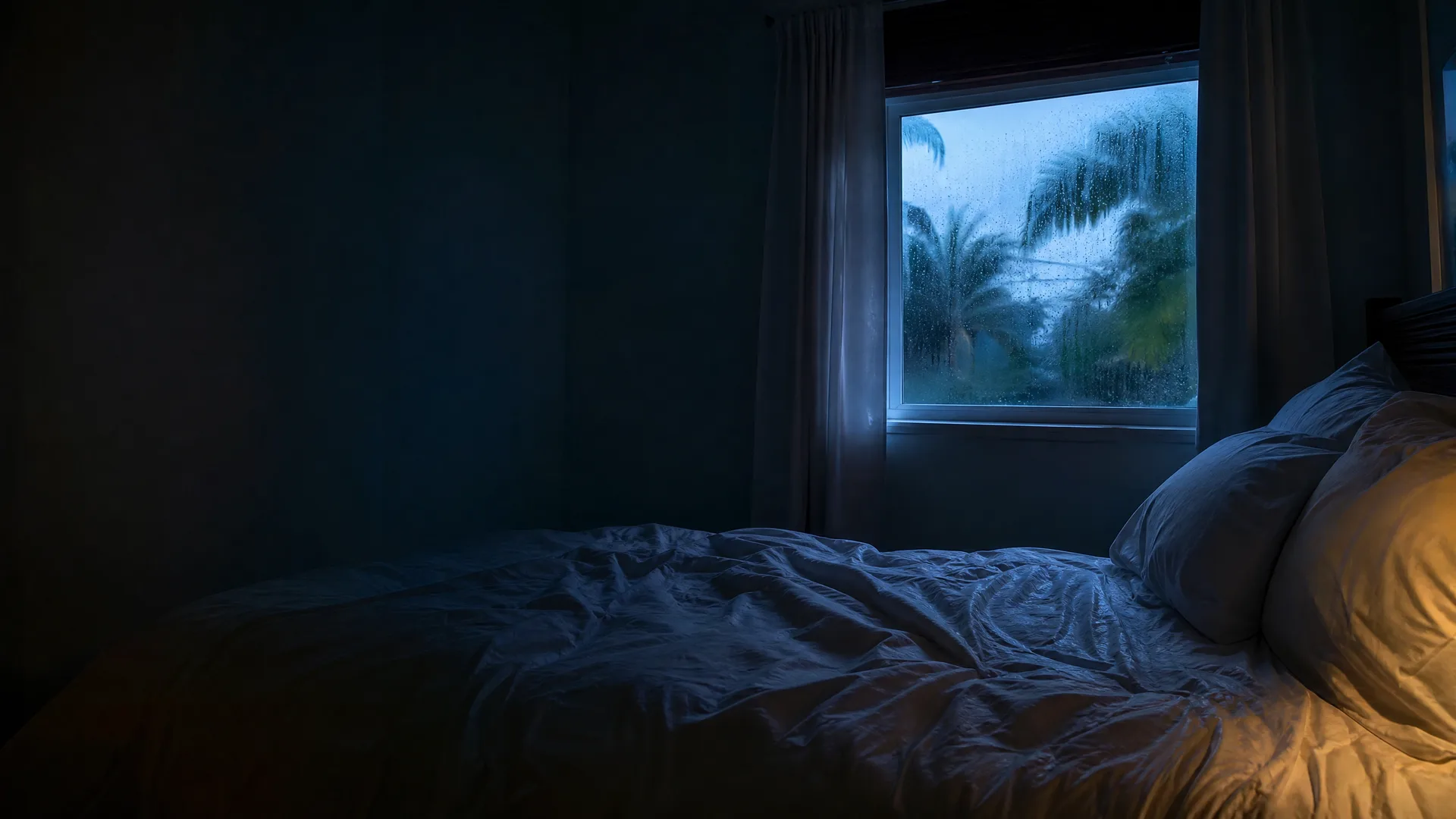
A dark bedroom with an unmade bed and pillows beside a curtained window showing rain-streaked glass and palm foliage outside.

It's past midnight and the sheets are stuck to your back. You push them off and sit up, and that's when you notice the carpet by the closet door is dark and soft under your foot. The heat pump is still running, you can hear it, air still coming through the vent, cool enough. But the window's fogged at the corners and the room feels thick anyway, like the unit's losing the fight against the night air. You pull the closet door open and the smell hits first, damp and a little sour. The pan under the air handler has already spilled over, a thin line of water creeping toward the hallway.

What are you actually noticing around the house

A damp patch on the carpet near the air handler closet. A stain spreading across the ceiling below it if the unit sits in the attic. A musty smell that wasn't there before. Sometimes it's just a few drops on the floor by the indoor unit, sometimes it's enough to warp the baseboard or sag the drywall above a bedroom. The outdoor unit can drip too, which is normal after it's been running hard in Louisiana heat. What isn't normal is water pooling where it has no business being, soaking into wood flooring or insulation, or feeding the kind of mold that shows up fast in this kind of humidity if it sits wet for a few days.

An outdoor air conditioning condenser unit on a concrete pad beside a house with horizontal lap siding, with a green shrub to the left and a wide concrete slab in the foreground.
Before you get your heat pump repair
A gray outdoor condenser unit on a concrete pad beside a house with horizontal lap siding, with a wall-mounted disconnect box, conduit and insulated refrigerant lines, a shrub at left and gravel at right.
After you get your heat pump repair
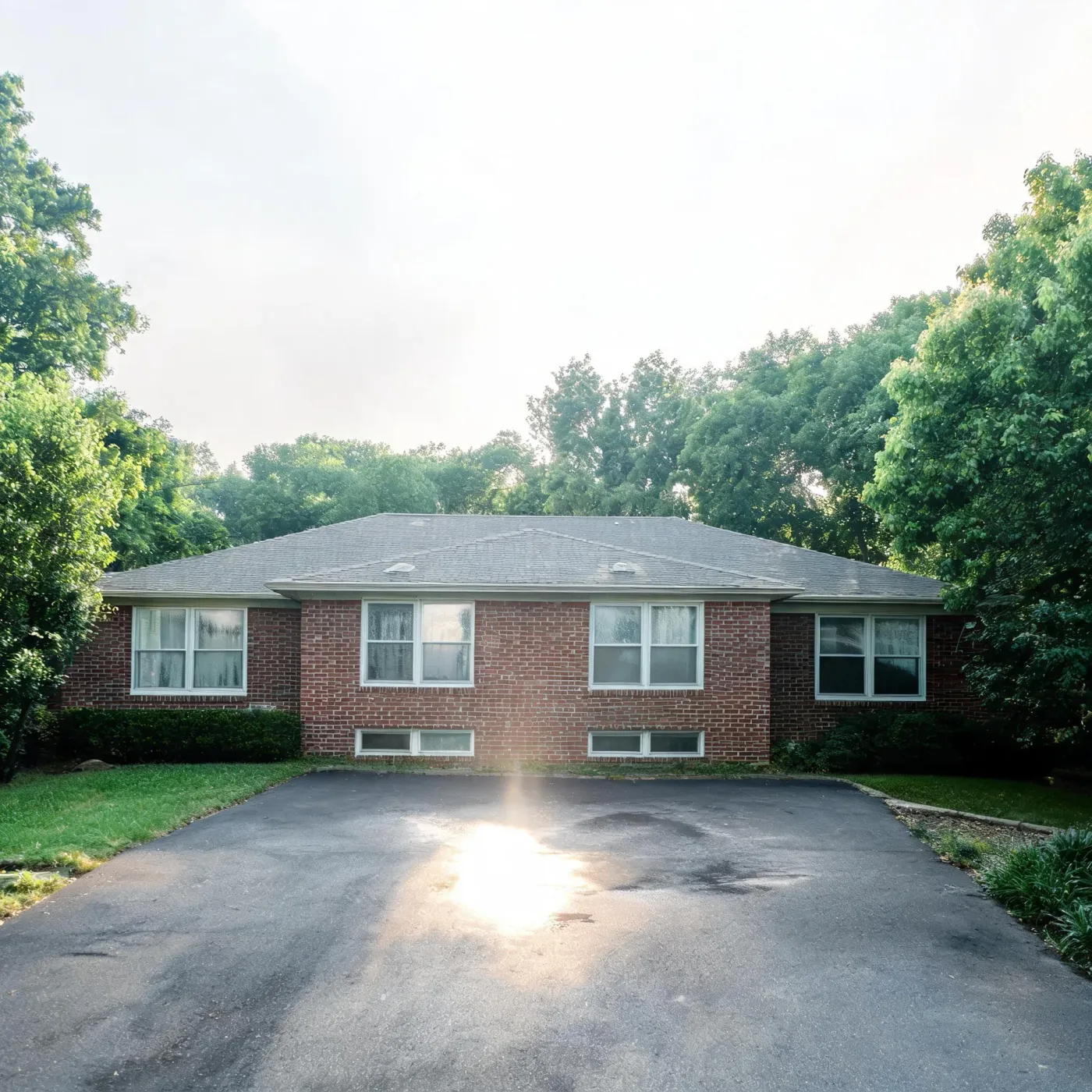
A single-story brick ranch house with a gray shingled hip roof, white-framed windows and basement windows, fronted by a wide asphalt driveway with sun glare, surrounded by green lawn and leafy trees under a bright hazy sky.

That dew point is what keeps the coil wet all summer. A 73°F average dew point across June, July and August means the air around your house is holding about as much moisture as it can, so the evaporator coil is pulling water out of it almost the whole time the system runs, not just on the hottest afternoons. More condensate means more water moving through that drain line, day after day, and a line that's already slow to drain has less room for error before it backs up. That's why leaks here tend to show up again and again once a clog starts, rather than as a one-time event.

NASA POWER T2MDEW county cells weighted by homes

A gray outdoor condenser unit sits on a concrete pad against a house wall with horizontal siding above a stone veneer base, with an electrical disconnect box and conduit on the wall and a leafy shrub in mulch to the left.
The coil here is clean and the pan drains freely, so condensation runs out through the line the way it's supposed to.
An outdoor air conditioner condenser unit on a concrete pad beside a house with beige vinyl siding, with a gray electrical disconnect box and insulated refrigerant lines on the wall and river rock to the right.
Caked-on dirt across the coil fins makes the unit work harder and gives algae and grime more surface to clog the drain line.

A leaking heat pump almost always comes down to a blocked drain line or a frozen coil, and both are routine repairs once someone gets eyes on the unit. What matters now is who does that work. A contractor who services heat pumps through Louisiana summers all year sees this same clog, the same float switch, the same algae buildup often enough to know where to look first instead of guessing. Get matched with one licensed contractor local to you, so you're dealing with a single company that knows the area rather than fielding calls from several crews you'd have to sort through yourself. That contractor can look at the drain line, the pan, and the coil, and tell you plainly what's causing the water and what it takes to stop it. The leak isn't a sign the system is failing. It's a sign something along that path needs clearing or repairing, and that's straightforward work for someone who does it regularly.

Kitchen corner with cream upper cabinets, oak lower cabinets, white marble-look countertop, beige tile backsplash, a ceramic vase of greenery, a wooden cutting board and bowl, and a black-framed window at right.
Interior corner of a room with a white-framed window and wide sill, beige walls with panel molding, a wooden cabinet holding a ceramic vase with a green leafy plant, and blurred shrubs and trees outside.
A wood-framed armchair with beige cushions and a woven lumbar pillow sits in a corner beside a large window overlooking green trees, with a tall ceramic vase holding leafy branches on the left and plaster walls and wood flooring.
Interior corner with a white-framed window above a sill, beige walls with baseboard molding, a greige shaker-style cabinet with brass knobs and a potted plant on top, light wood flooring and a woven jute rug.
A dark-framed six-pane window with white trim and sill set in gray horizontal lap siding, with hydrangea shrubs below and a white column and shingled roof section at left.

A heat pump pro near you

Only one pro gets your request, so you hear from one company.

Get my match

There's no charge for the request.